A wedding invitation can give guests a glimpse of your outfit weeks before you wear it. The trick is choosing what to give away. A flower stitched into the hem of an organza lehenga could sit beside your names, even if nobody knows where it came from. When that same flower turns up on your skirt at the ceremony, the invitation takes on a second meaning. The colour, neckline and shape of the outfit can all stay a surprise.
Find the Detail You Love
Begin at your fitting with the smallest detail you would recognise if someone drew it on a scrap of paper. It could be a bud that leans to one side, a pair of leaves joined at the stem, or the curved edge of a sleeve. Choose something you actually love about the garment. If the motif could have come from any floral invitation in the sample book, look again at the bit of embroidery you keep running your fingers over.
A Sprig From the Hem
One sky blue design has fine zari weaving across the skirt and floral embroidery at the hem. Its matching dupatta carries small scattered motifs and a floral border. For a drawing beside the wedding date, photograph the hem spread flat and circle a sprig whose leaves you can see clearly. A flower caught in a fold may seem to have three petals until the skirt opens and reveals five. That difference matters when one sprig has the whole page to itself.
Borrow a Single Petal
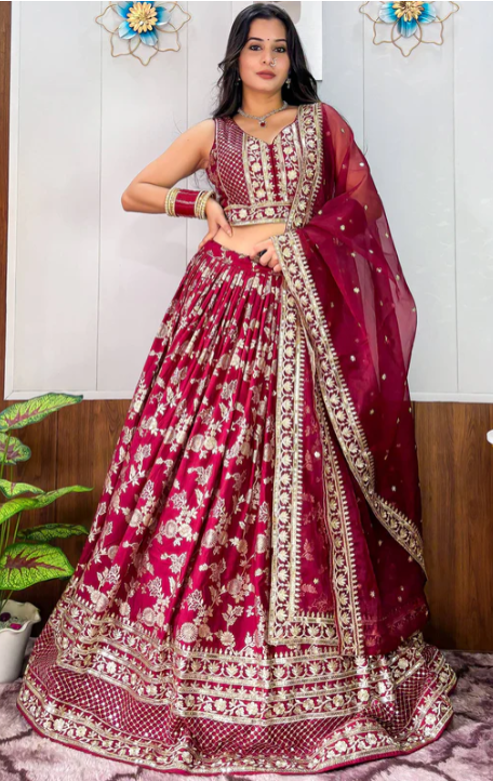
A pink lehenga with a bold rose print calls for a different crop. One organza set combines deep pink, berry and maroon flowers with a wide border of sequins and raised cord embroidery. To keep the print a surprise, borrow the outline of a single curling petal and repeat it across the envelope lining. Guests opening the envelope see a loose, rippling pattern. On the wedding day, the complete rose gives that little curve a shape the paper only hinted at.
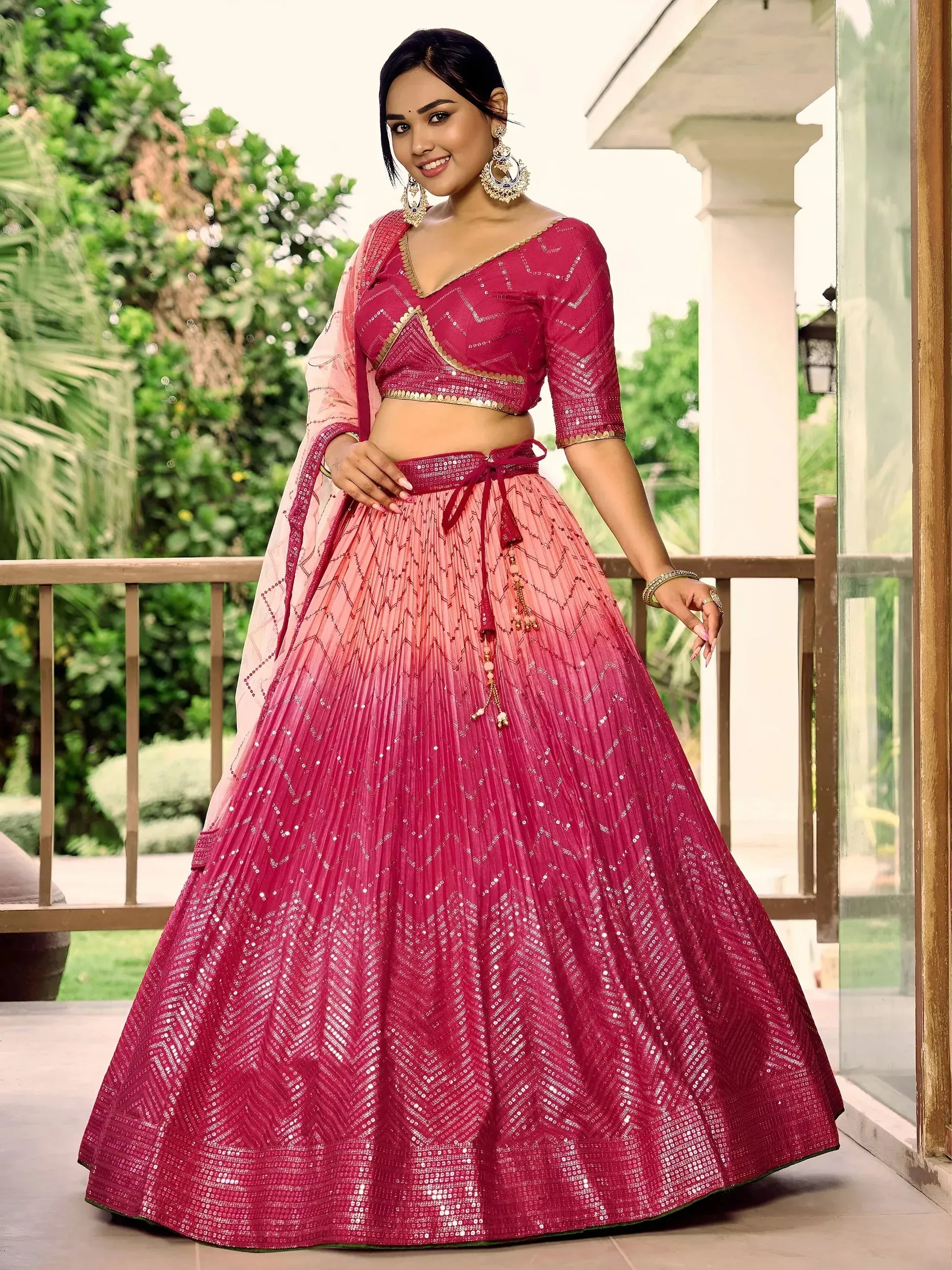
Give the Illustrator a Brief
Your illustrator needs to see how a motif is made. A photograph taken straight down shows its outline, while a second shot from the side helps distinguish raised cord from a shadow in the print. Include a ruler beside the fabric in one frame so the artist can judge the original scale. You can photograph a small area at the fitting even if the blouse is unfinished. Send a short note with the images so the artist knows what to draw.
-
Motif to include
-
Details to omit
-
Preferred ink colour
-
Position on card
-
Finished print size
Decide Which Colours to Share
Colour is one decision you can save for the ceremony. A berry rose drawn in brown ink on warm ivory paper still has its familiar curled petals. The sky blue skirt offers another possibility. Keep the blue for the envelope and draw the flower in the same dark ink as your names. Both approaches leave something for guests to discover. Request a colour sample on your chosen paper before settling on a shade, particularly if you are ordering envelopes separately.
Hold the Printed Proof
Once the sketch arrives, read the invitation before examining the drawing. A stem that curls around the venue name can make two words appear joined. A floral border that looks fine on screen can leave little space for the names of both families. Print the proof at the size guests will hold, then fold it or slip it into an envelope. You may find that moving one flower to the back gives a crowded line of type room to breathe.
Make the Phone Version Legible
Some details will travel better than others when relatives forward the invitation by phone. Fine lines that remain distinct in a printed sprig may fade on a small screen, while the broad curve of a rose petal usually survives the change of scale. Ask for a phone version with one flower beside the names and keep the fuller pattern for paper. Open the file from a message on your own phone and read the date and address without enlarging the picture.
Conclusion
The wedding dinner gives you somewhere to show the rest of the drawing. If your envelopes carried one curved petal, put the open rose at the top of the menu. If a single blue sprig sat beside your names, let a row of those sprigs run along the place cards like the flowers around your skirt. Ask the illustrator to prepare both drawings together, using the same ink. Save the complete flower for the first meal you share with your guests.