



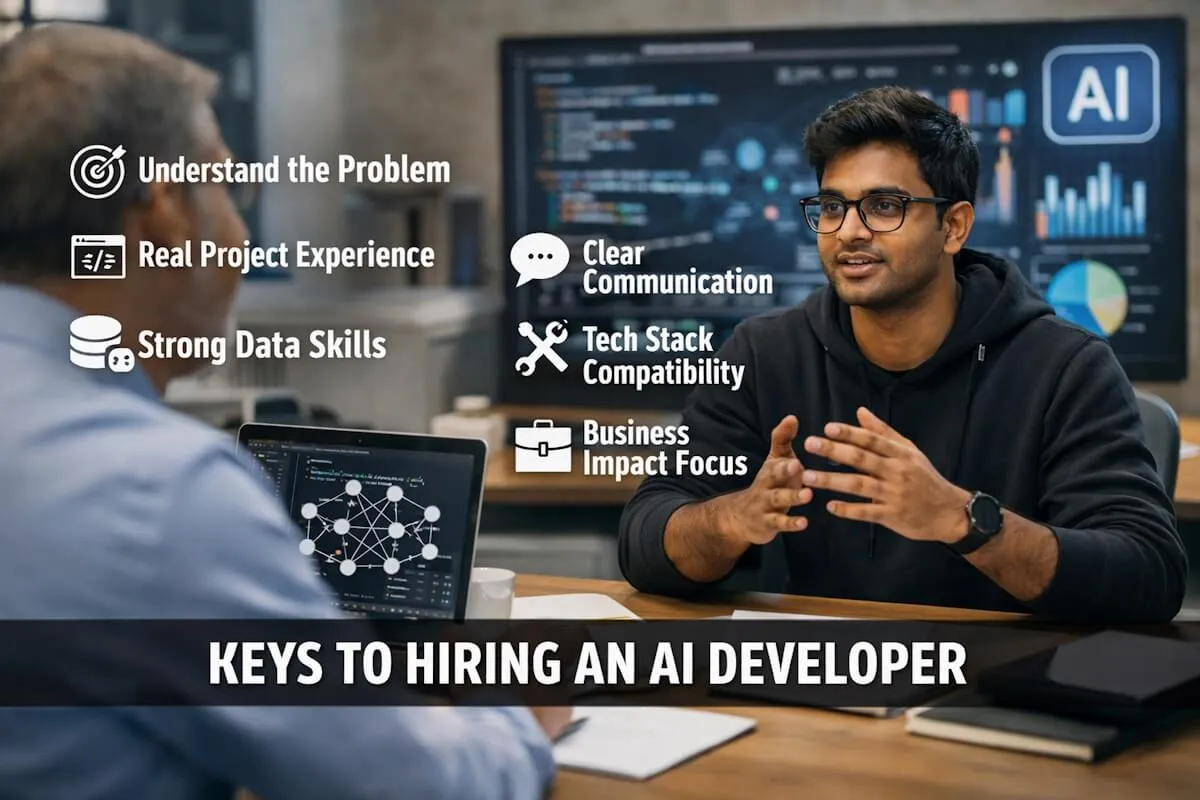
Hiring the right people for your tech team is never simple. When it comes to AI, things get even trickier. The talent pool looks wide from a distance, but once you start filtering for real skills, it shrinks fast.
So how do you avoid hiring someone who talks big but delivers little?
If you’re a CTO, you already know this is not just about resumes. It’s about finding people who can actually build, think, and adapt. Let’s break down what really matters before you bring AI developers on board.
Start With the Problem, Not the Resume
Before reviewing candidates, pause for a second.
What exactly do you want to build?
Are you trying to automate workflows, improve recommendations, or analyze customer behavior? Each goal needs a different skill set. Hiring without clarity often leads to wasted time and budget.
You don’t need a “rockstar AI engineer.” You need someone who can solve your specific problem.
Ask yourself:
- What kind of data will they work with?
- Do you need real-time systems or batch processing?
- Is this a short-term project or long-term product?
Once you know this, hiring becomes more focused.
Look Beyond Buzzwords
Many candidates know how to talk. Fewer know how to build.
You’ll hear terms like neural networks, deep learning, and automation tossed around. That’s fine. But can they explain their work in plain language?
If someone cannot break down their approach simply, chances are they don’t fully understand it themselves.
Try this during interviews:
- Ask them to explain a past project like they’re talking to a non-technical person
- See how they approach a problem step by step
- Notice if they rely on memorized answers
Clarity beats complexity every time.
Real Project Experience Matters More Than Degrees
A fancy degree looks nice on paper. But real-world experience is what counts.
You want developers who have:
- Built models from scratch
- Deployed systems into production
- Handled messy, incomplete data
- Fixed things when they broke
Ask for examples. Not theory. Not ideas. Actual work.
What did they build? What went wrong? How did they fix it?
Those answers tell you more than any certification.
Strong Data Handling Skills Are Non-Negotiable
AI work is not just about models. It’s mostly about data.
Bad data leads to bad outcomes. Simple as that.
Your ideal hire should be comfortable with:
- Cleaning and preparing data
- Identifying gaps or inconsistencies
- Working with structured and unstructured data
- Choosing the right data sources
If they jump straight to modeling without discussing data preparation, that’s a red flag.
Ability to Work With Your Existing Tech Stack
Here’s where many hiring decisions go wrong.
You find someone talented, but they prefer tools that don’t match your system. Now your team spends more time adjusting than building.
Instead, look for developers who:
- Adapt to your current setup
- Understand APIs and integrations
- Can work with your backend and frontend teams
You don’t need someone rigid. You need someone flexible.
This becomes even more important if you’re working with external partners offering AI Development Services. You want alignment, not friction.
Communication Skills Are Not Optional
This one gets overlooked a lot.
AI developers don’t work in isolation. They need to collaborate with product managers, designers, and business teams.
If they can’t communicate clearly, things slow down.
Watch for:
- How they explain trade-offs
- How they handle feedback
- Whether they ask the right questions
You want someone who speaks up, not someone who just codes quietly and disappears.
Problem-Solving Mindset Over Perfect Code
Perfection sounds good. But in real projects, speed and adaptability matter more.
You need developers who:
- Test ideas quickly
- Learn from failures
- Adjust their approach when needed
Ask them about a time when something didn’t work. Their answer will reveal how they think under pressure.
Do they blame tools? Or do they take ownership?
That difference matters.
Understanding of Business Impact
Not every AI solution adds value.
Some look impressive but don’t move the needle.
Your developer should understand:
- Why the project exists
- What success looks like
- How their work affects business outcomes
If they only focus on technical details without connecting to results, you may end up with something that works but isn’t useful.
Ask About Deployment, Not Just Development
Building a model is only half the job.
Getting it to work in a real environment is where things get real.
Ask questions like:
- How have you deployed models before?
- How do you monitor performance?
- What happens when the system starts failing?
You want someone who thinks beyond development.
Cultural Fit Still Matters
Skills are important. But culture matters too.
Will they:
- Work well with your team?
- Handle deadlines without constant pressure?
- Stay curious and keep learning?
A highly skilled developer who doesn’t fit your team can slow everything down.
Freelancers, In-House, or Agency
There’s no one-size-fits-all answer here.
Each option has pros and cons.
Freelancers
- Good for short-term work
- Flexible but may lack consistency
In-house hires
- Better control and long-term stability
- Higher cost and longer hiring cycle
Agencies or partners
- Access to a team instead of one person
- Faster execution
If you want to move quickly without building a full team, you might consider options where you can hire AI Developers through trusted providers. This often gives you access to experienced professionals without long-term commitments.
Test Before You Commit
Don’t rely only on interviews.
Give candidates a small task. Something practical. Something relevant.
It doesn’t need to be complex.
Just enough to see:
- How they approach problems
- How clean their work is
- How they handle feedback
This step can save you from costly mistakes.
Watch Out for Overpromising
If something sounds too good, it probably is.
Be cautious of candidates who:
- Guarantee perfect accuracy
- Claim they can solve anything quickly
- Avoid discussing limitations
Good developers are honest about what’s possible and what’s not.
Long-Term Thinking Wins
AI is not a one-time effort.
It needs updates, monitoring, and adjustments over time.
So when hiring, think beyond the first project.
Ask yourself:
- Can this person grow with your company?
- Will they adapt as your needs change?
Short-term thinking leads to long-term problems.
Quick Checklist for CTOs
If you want a simple way to evaluate candidates, keep this in mind:
- Do they understand your problem clearly?
- Can they explain their work in simple terms?
- Have they built and deployed real solutions?
- Are they comfortable working with your systems?
- Do they communicate well with teams?
- Can they connect their work to business outcomes?
If most answers are yes, you’re on the right track.
Final Thoughts That Actually Matter
Hiring AI developers is not about chasing trends. It’s about solving real problems with the right people.
Take your time. Ask better questions. Focus on practical skills over polished resumes.
And don’t get distracted by fancy terms.
At the end of the day, you need someone who can build, adapt, and deliver. Someone who understands your goals and works toward them without unnecessary noise.
That’s the hire worth making.
