
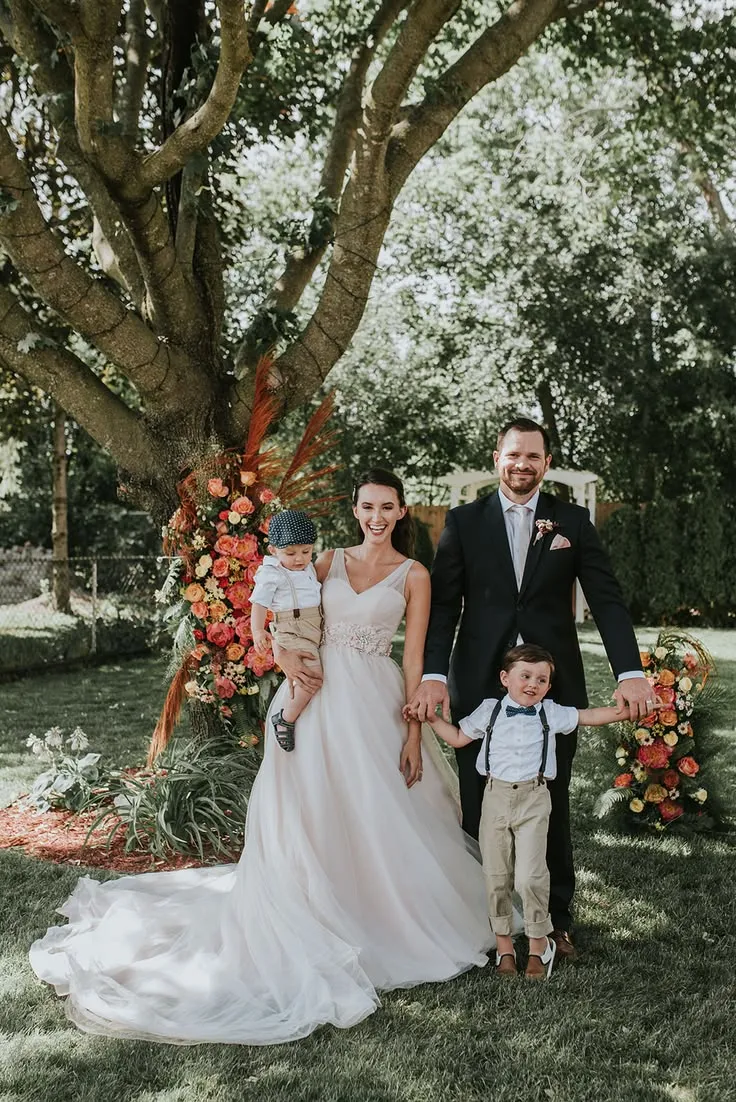


Flower girls, ring bearers, junior attendants, and younger relatives can bring warmth and unpredictability to a wedding. They may walk confidently down the aisle, stop halfway to wave at someone, become shy around a camera, or decide that formal portraits are no longer interesting. Those moments are not necessarily problems. Couples can get meaningful photographs by planning around children’s attention spans, comfort, and routines rather than expecting them to behave like miniature adults. A flexible approach usually produces images that feel more natural and far less stressful for everyone involved.
Keep Their Role Simple and Clear
Young children do best when they understand one or two simple expectations. A flower girl may only need to walk with an adult and stand briefly for a photograph. A ring bearer does not need to carry the actual rings if that creates unnecessary pressure.
Couples arranging Destination Wedding Photography Asheville Nc can tell the photographer which children are participating and roughly how old they are. That context helps the photographer plan groupings, choose a sensible order, and avoid scheduling a long portrait sequence after a child has already spent hours getting dressed and waiting.
Photograph Children Early When Possible
Children’s energy often changes as the day progresses. A toddler who is cheerful before the ceremony may become tired by dinner, while an older child may lose patience after several formal photographs.
When practical, include essential child portraits near the beginning of the family or wedding-party session. Photograph the combinations that matter most, then release the child instead of expecting them to remain nearby for every variation. This approach respects their limits and reduces the chance that adults become frustrated while trying to keep them engaged.
Let Real Expressions Be Enough
Not every child will smile on command, and trying repeatedly to force one can make the situation worse. Serious expressions, curiosity, laughter, distraction, and even a little uncertainty can all become meaningful parts of the wedding story.
A Weaverville Wedding Photographer may capture stronger images by allowing a child to interact with a parent, sibling, or member of the wedding party rather than asking for a fixed pose. Movement and familiar relationships often create more believable expressions than repeated instructions to look at the camera.
Bring Familiar Support
A trusted adult should be responsible for the child throughout the wedding. That person can help with snacks, bathroom breaks, clothing adjustments, and transitions between locations.
The couple should not have to stop preparations or portraits to manage these details. A parent, grandparent, babysitter, or another familiar caregiver can step in when the child needs a break. This support is especially useful during ceremonies, where the child may need to leave quietly without disrupting the schedule.
Plan Around Food, Naps, and Comfort
A wedding timeline may look reasonable to adults while overlapping directly with a young child’s usual nap or meal. Couples cannot always redesign the day around one routine, but they can prepare for predictable needs.
Pack familiar snacks, water, comfortable shoes, an extra layer, and a change of clothing if appropriate. If there is a quiet room available, identify it before guests arrive. A short break away from noise and attention can help a child return to the celebration feeling calmer.
Avoid Making the Aisle Walk a Test
Children can behave unpredictably during the processional, even after a perfect rehearsal. They may walk too quickly, stop to talk, refuse to move, or seek out a parent in the audience.
Build that possibility into the plan. An adult can accompany younger children, or they can enter as part of a small group. If the child changes course, the ceremony should continue. The unexpected version may become more memorable than the perfectly rehearsed one.
Keep Reception Expectations Flexible
Some children love dancing and interacting with guests; others become overwhelmed once the reception gets louder. Couples do not need to keep younger attendants present until the final event of the night.
If important photographs have already been taken, children can leave early with a caregiver when needed. Their role in the wedding remains complete, and the reception can continue without asking them to push past their comfort.
Conclusion
Children can add personality, humor, and genuine emotion to wedding photographs precisely because they do not follow the day as predictably as adults. The best approach is to keep their responsibilities simple, photograph essential combinations early, provide familiar support, and respect routines around food, rest, and comfort. Couples do not need perfect smiles or flawless aisle walks to create meaningful images. When children are allowed to behave like children, the photographs often preserve something more valuable: the real personality and relationships they brought to the celebration.
